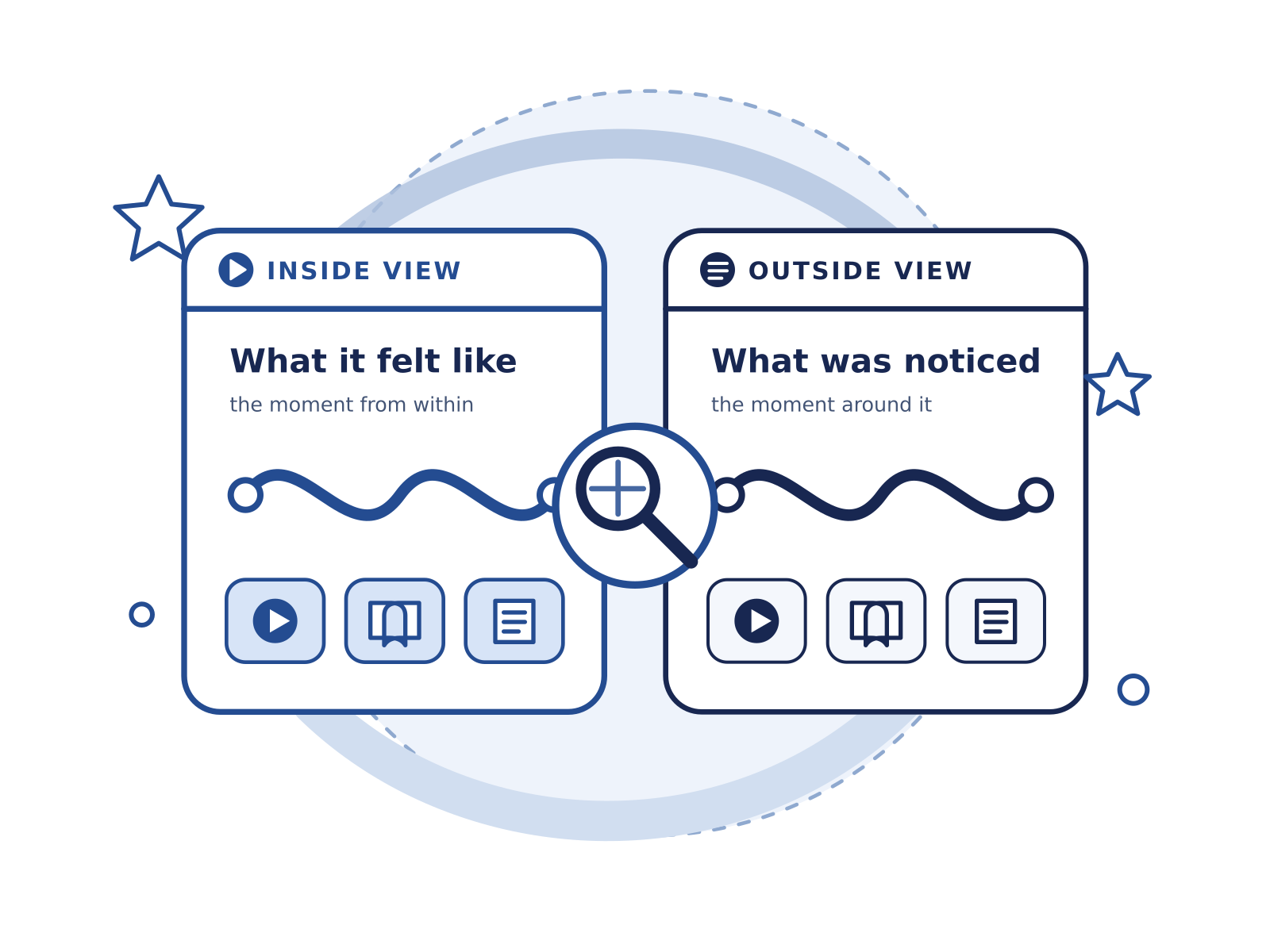
Video · Chris / Inside view
Chris explains body doubling from lived experience: having another person nearby—even quietly and without directing or advising him—can provide a grounding point that helps him stay focused and productive.
By Chris
Captions: AvailableTranscript: Available
View resource →
Video · Chris / Inside view
Chris gives a concise definition of autistic masking as forcing yourself to act more neurotypically when you expect judgment or cannot behave naturally, and explains how that pressure can contribute to burnout and end-of-day exhaustion.
By Chris
Captions: AvailableTranscript: Available
View resource →
Video · Chris / Inside view
Chris describes the shame and regret that can follow a meltdown when an autistic child knows they acted out but did not feel in control, and why criticism or punishment can intensify an already difficult aftermath.
By Chris
Captions: AvailableTranscript: Available
View resource →
Video · Chris / Inside view
Chris explains how preferred activities and hyperfocus can reorder his internal priority list, causing lower-interest tasks to keep sliding down even when he genuinely intends to complete them.
By Chris
Captions: AvailableTranscript: Available
View resource →
Article · Laura / Outside view
Laura describes years of unpredictable school calls and the hypervigilance that followed, using a therapist’s ping-pong-ball analogy for repeated stress.
By Laura
Web article: AvailableDesigned document: Available
Read article →
Article · Laura / Outside view
Laura revisits moments that looked like defiance and punishment failure before the family had language for overload, preferred activities, and a different way of processing authority.
By Laura
Web article: AvailableDesigned document: Available
Read article →
Article · Laura / Outside view
Laura traces Chris’s deep preferred interests and explains how pulling him from a regulating focus into a non-preferred task was often misread as defiance.
By Laura
Web article: AvailableDesigned document: Available
Read article →
Article · Laura / Outside view
Through family, college, and everyday stories, Laura explores Chris’s literal logic, unfiltered honesty, humor, and the misunderstandings that can follow.
By Laura
Web article: AvailableDesigned document: Available
Read article →
Article · Laura / Outside view
A parent-focused overview of IDEA concepts including FAPE, IEPs, free services, least restrictive environment, parent rights, and Child Find.
By Laura
Web article: AvailableDesigned document: Available
Read article →
Article · Laura / Outside view
Laura describes how Chris learned to suppress visible behaviors to fit into mainstream school and reflects on the emotional and physical toll of masking.
By Laura
Web article: AvailableDesigned document: Available
Read article →
Article · Laura / Outside view
Laura looks back at Chris’s unconventional developmental milestones and the intense observation that often came before a skill appeared all at once.
By Laura
Web article: AvailableDesigned document: Available
Read article →
Article · Laura / Outside view
A parent-focused reflection on patience, repetition, support, community, and the small moments that can signal meaningful growth over time.
By Laura
Web article: AvailableDesigned document: Available
Read article →
Article · Chris / Inside view
Chris explains how vague instructions and unfinished schedules can trigger overthinking, stress, and burnout, using work and a Lego set as concrete examples.
By Chris
Web article: AvailableDesigned document: Available
Read article →
Article · Laura / Outside view
A parent-friendly introduction to IEPs focused on present levels (PLAAFP) and the first SMART goals that flow from that snapshot of the student.
By Laura
Web article: AvailableDesigned document: Available
Read article →
Article · Laura / Outside view
A side-by-side comparison of IEPs and 504 Plans covering purpose, governing law, services, goals, team involvement, review, protections, eligibility, and practical examples.
By Laura
Web article: AvailableDesigned document: Available
Read article →
Article · Laura / Outside view
Laura reflects on finding the help her family really needed and how raising Chris reshaped her ideas about appearances, support, and humility.
By Laura
Web article: AvailableDesigned document: Available
Read article →
Article · Laura / Outside view
Laura recalls the first suggestion that Chris might be autistic, her initial denial, the paperwork she threw away, and the six months that changed her readiness to listen.
By Laura
Web article: AvailableDesigned document: Available
Read article →
Article · Laura / Outside view
Laura revisits the early years when she followed every parenting checklist while Chris quietly observed the world in ways the rulebooks had not prepared her to recognize.
By Laura
Web article: AvailableDesigned document: Available
Read article →
Article · Laura / Outside view
Laura tells the story of Chris and Markus, a childhood friendship rooted in uncomplicated acceptance that grew from toddler years into adulthood.
By Laura
Web article: AvailableDesigned document: Available
Read article →
Video · Laura / Outside view
Laura explains how repetitive questions can be a way of seeking predictability and regulating an anxious or unsettled nervous system, and shares a simple response pattern built around consistency and visual support.
By Laura
Captions: AvailableTranscript: Available
View resource →
Video · Laura / Outside view
Laura shares a calm, practical way to reconnect with a child who is deeply hyper-focused: use their name, approach gently, move into their line of sight, and repeat the message without escalating.
By Laura
Captions: AvailableTranscript: Available
View resource →
Video · Laura / Outside view
Laura gives a high-level comparison of 504 plans and IEPs, using classroom examples to show the difference between accommodations for access and individualized instruction or additional supports.
By Laura
Captions: AvailableTranscript: Available
View resource →
Video · Laura / Outside view
Laura shares three practical ideas for supporting a child during a meltdown: check basic needs such as hunger, reduce stimulation with a quiet safe space, and allow time for the nervous system to settle without adding more demands.
By Laura
Captions: AvailableTranscript: Available
View resource →
Video · Laura / Outside view
Laura shares a simple way to make task transitions less abrupt: pause, give advance notice, and reassure the child about what is happening next.
By Laura
Captions: AvailableTranscript: Available
View resource →
Video · Chris / Inside view
Chris explains how self-regulating movements and coping responses can appear when an autistic person feels observed or emotionally activated—and why what helps depends on the person, time, and place.
By Chris
Captions: PreparingTranscript: Available
View resource →
Video · Chris / Inside view
Chris discusses autism, inherited traits, and his family history while challenging the idea that autistic people need to be cured.
By Chris
Captions: PreparingTranscript: Available
View resource →
Video · Chris / Inside view
Chris discusses inherited autistic traits, challenges common environmental myths, and explains why autism is not something a person suddenly develops after birth.
By Chris
Captions: PreparingTranscript: Available
View resource →
Video · Chris / Inside view
Chris introduces the family behind Decoding Divergent and invites you to explore their lived-experience videos and website.
By Chris
Captions: AvailableTranscript: Available
View resource →
Video · Chris / Inside view
Chris explains parallel play—how two people can share a room, talk, and connect while doing different activities—and why parents do not need to mistake it for a lack of interaction.
By Chris
Captions: AvailableTranscript: Available
View resource →
Video · Chris / Inside view
Chris explains why direct eye contact can feel anxious, threatening, or exposing—and why looking away does not mean an autistic person is not listening.
By Chris
Captions: AvailableTranscript: Available
View resource →
Video · Chris / Inside view
Chris describes perseveration and hyperfixation: an unfinished task can stay mentally open, making it extremely difficult to switch attention or move on.
By Chris
Captions: AvailableTranscript: Available
View resource →
Video · Chris / Inside view
Chris explains sensory hypersensitivity through everyday examples: scratchy clothing tags, a narrow temperature comfort range, and unpredictable sounds that disrupt sleep.
By Chris
Captions: AvailableTranscript: Available
View resource →
Video · Chris / Inside view
Chris explains masking as hiding autistic or ADHD traits to meet social expectations, why it is exhausting and unsustainable, and how acceptance at home can make it safer to be authentic.
By Chris
Captions: AvailableTranscript: Available
View resource →
Video · Chris / Inside view
Chris uses a computer-RAM and workbench analogy to explain why autistic and ADHD people may devote most of their mental capacity to preferred subjects, leaving less available for transitions and lower-interest tasks.
By Chris
Captions: AvailableTranscript: Available
View resource →
Video · Chris / Inside view
Chris explains why sensitivity to noise, temperature, light, and changing weather is not abnormal—and how parents can respond with curiosity, practical accommodations, and coping support.
By Chris
Captions: AvailableTranscript: Available
View resource →
Video · Chris / Inside view
Chris explains how different kinds of music help him process anger, low moods, and difficult emotions—and why a personalized playlist can provide a practical outlet for autistic self-expression and regulation.
By Chris
Captions: AvailableTranscript: Available
View resource →
Video · Laura / Outside view
Laura explains why she created Decoding Divergent: to give families community and hope, help Chris build an authentic future around his strengths, and make room for paths that do not fit a conventional box.
By Laura
Captions: AvailableTranscript: Available
View resource →
Video · Laura / Outside view
Laura reflects on the community that grew around Chris from kindergarten into young adulthood, and why parents raising neurodivergent children can need people who truly understand the day-to-day journey.
By Laura
Captions: AvailableTranscript: Available
View resource →
Video · Laura / Outside view
Laura recalls surprising four-year-old Chris with a Disneyland trip and realizing that excitement, disrupted routines, and sudden change could overwhelm his nervous system even when the surprise was meant to be joyful.
By Laura
Captions: AvailableTranscript: Available
View resource →
Video · Chris / Inside view
Chris explains why autism is not a disease to cure—and why being different never means broken, inferior, or less worthy.
By Chris
Captions: PreparingTranscript: Preparing
View resource →
Guide · Combined perspectives
A practical toolkit for executive function at ages 4–7, with visual timers, First/Then supports, one-step instructions, body doubling, movement, sensory anchoring, routines, and scripts for hard moments.
By Decoding Divergent
Toolkit document: AvailableDesigned document: Available
View resource →
Guide · Combined perspectives
A parent-centered toolkit for understanding meltdowns and shutdowns in neurodivergent children ages 4–7, with practical in-the-moment support, transition scripts, repair guidance, and a quick-reference card.
By Decoding Divergent
Toolkit document: AvailableDesigned document: Available
View resource →
Guide · Combined perspectives
A 10-page parent toolkit for talking with a child about a neurodivergent diagnosis, including preparation guidance, age-specific scripts, do-and-don’t guardrails, a before/during/after checklist, and a follow-up plan.
By Decoding Divergent
Toolkit document: AvailableDesigned document: Available
Unlock resource →
Guide · Combined perspectives
A 21-page toolkit explaining PDA, how it differs from ODD, autism and ADHD, how the profile can look by age, why traditional strategies may backfire, low-demand approaches, school advocacy, scripts, red flags, home support, and caregiver self-care.
By Decoding Divergent
Toolkit document: AvailableDesigned document: Available
Unlock resource →
Guide · Combined perspectives
A focused toolkit on ADHD impulsivity and misbehavior, covering regulation, working-memory gaps, de-escalation, environmental supports, replacement skills, and parent guidance.
By Decoding Divergent
Toolkit document: AvailableDesigned document: Available
Unlock resource →
Guide · Combined perspectives
A practical toolkit for executive-function demands at ages 8–12, including homework, planning, task chunking, visible supports, body doubling, movement breaks, working-memory strategies, and scripts.
By Decoding Divergent
Toolkit document: AvailableDesigned document: Available
Unlock resource →
Guide · Combined perspectives
A parent-centered toolkit for the ages 8–12 window, covering meltdowns versus shutdowns, masking, warning signs, in-the-moment support, repair, school and social pressures, prevention, and practical scripts.
By Decoding Divergent
Toolkit document: AvailableDesigned document: Available
Unlock resource →
Video · Chris / Inside view
Chris describes how preferred subjects can become intense, long-running phases—such as space, owls, or dinosaurs—and how the subject may change while the depth of focus remains strong.
By Chris
Captions: AvailableTranscript: Available
Unlock resource →
Video · Chris / Inside view
Chris expands the mental-RAM and workbench analogy to explain how a preferred subject can keep using most available cognitive capacity, leaving much less for other tasks even when those tasks still matter.
By Chris
Captions: AvailableTranscript: Available
Unlock resource →
Article · Laura / Outside view
A practical parent-oriented guide to writing measurable, disability-aligned IEP goals, with examples across academic, executive-functioning, social-emotional, and behavioral needs.
By Laura
Web article: AvailableDesigned document: Available
Unlock article →
Article · Laura / Outside view
Laura recounts a difficult first-grade year and the conversation with a trusted teacher that challenged her assumptions about medication as a possible support for Chris.
By Laura
Web article: AvailableDesigned document: Available
Unlock article →
Article · Laura / Outside view
Laura reflects on the “special day” preschool classroom that introduced her to other families living a similar parenting reality and friendships that lasted into their children’s adulthood.
By Laura
Web article: AvailableDesigned document: Available
Unlock article →
Video · Chris / Inside view
Chris explains how discouraging stimming within a family can teach autistic children to mask, contributing to exhaustion, depression, and distress—and why understanding at home matters.
By Chris
Captions: AvailableTranscript: Available
Unlock resource →